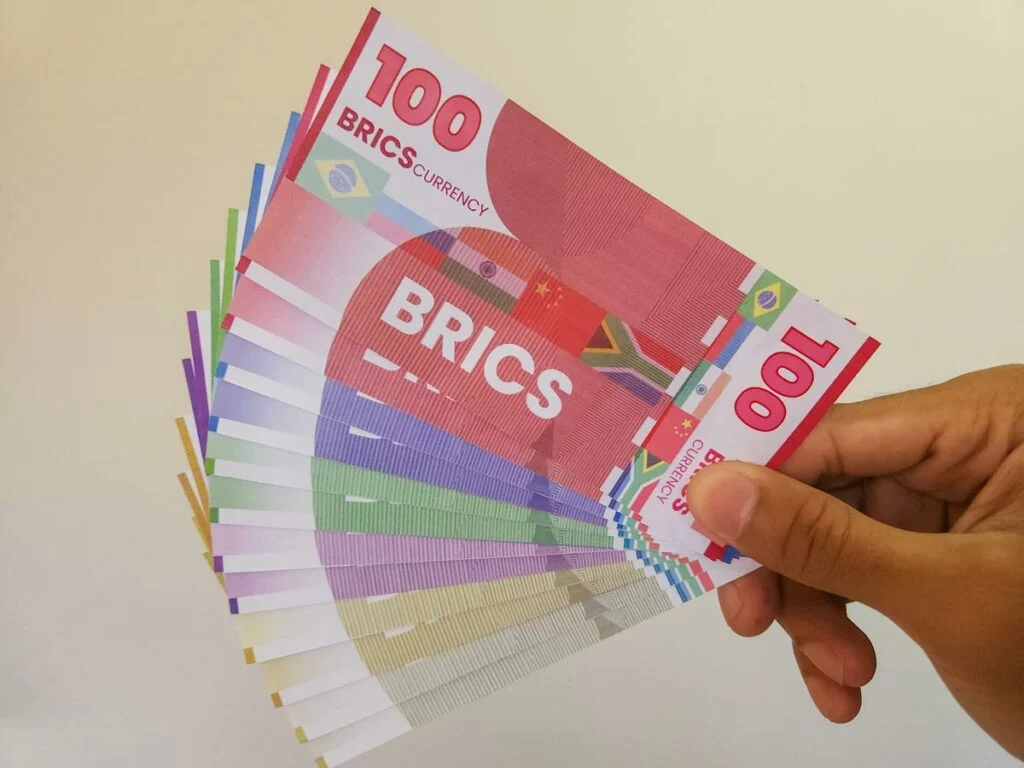
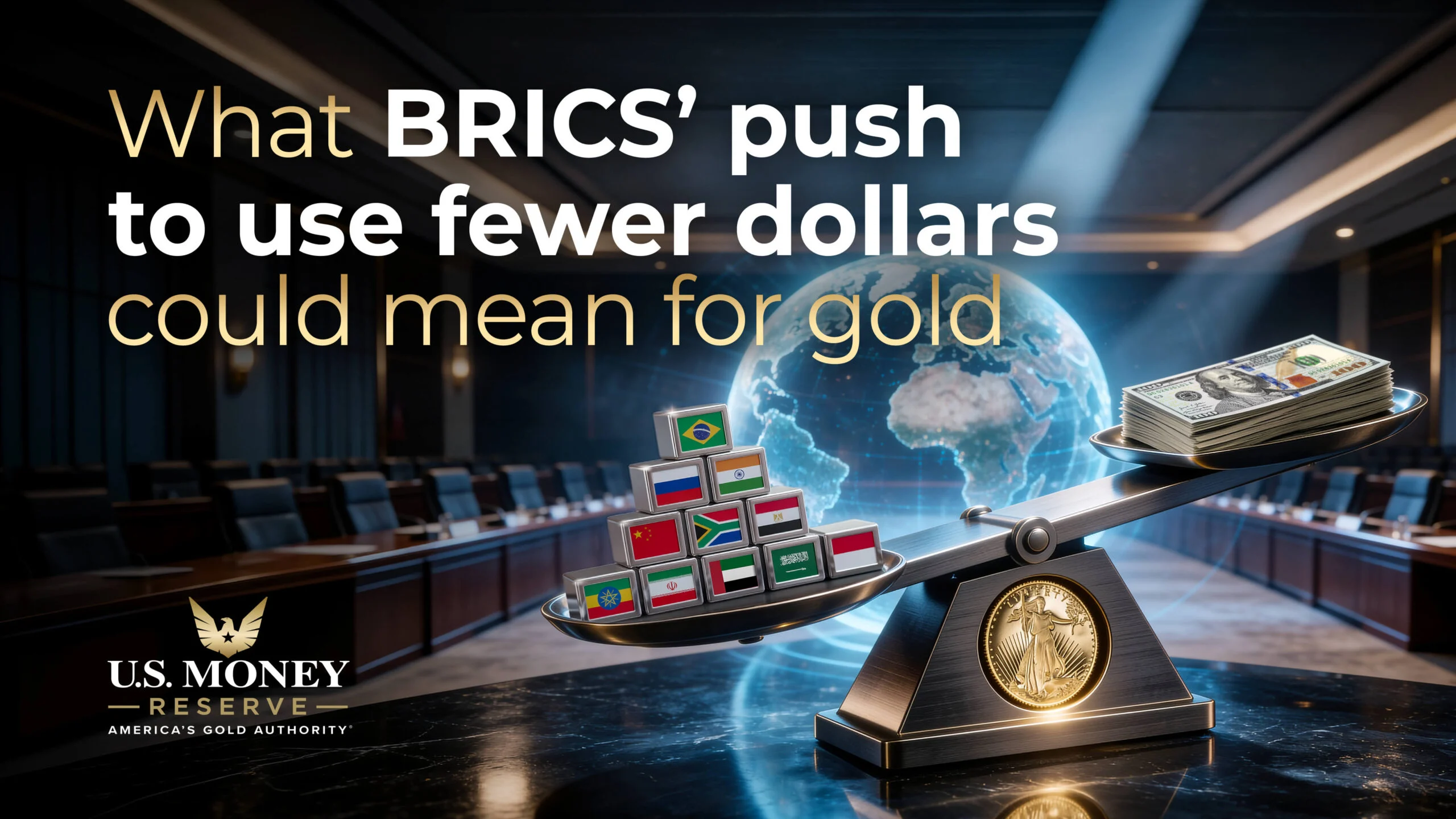
At its September summit in New Delhi, BRICS renewed discussions about making cross-border payments easier and using members’ local currencies in trade. If more countries rely less on the U.S. dollar, what could that mean for gold?
In a recent episode of America’s Gold Authority Podcast, former U.S. Mint Director and U.S. Money Reserve Senior IRA Strategist Edmund C. Moy joined host Mike Barnes to discuss BRICS, the dollar’s role in global trade, and why central banks hold gold.
Watch the Podcast Shifting the Balance: BRICS, the Dollar, and the Future of GoldWhat is BRICS trying to change?
BRICs takes its name from its original members: Brazil, Russia, India, and China. The group has since expanded to include South Africa, Egypt, Ethiopia, Iran, Saudi Arabia, the United Arab Emirates, and Indonesia. Its members have different economies and political priorities, but Moy says they share an interest in having a greater say in global affairs.
At the group’s 18th summit, members adopted the New Delhi Declaration. It calls for continued work on faster, less costly cross-border payments and acknowledges discussions about settling trade in members’ local currencies. It also recognizes that countries have different priorities and that there is no single approach that will work for all of them.
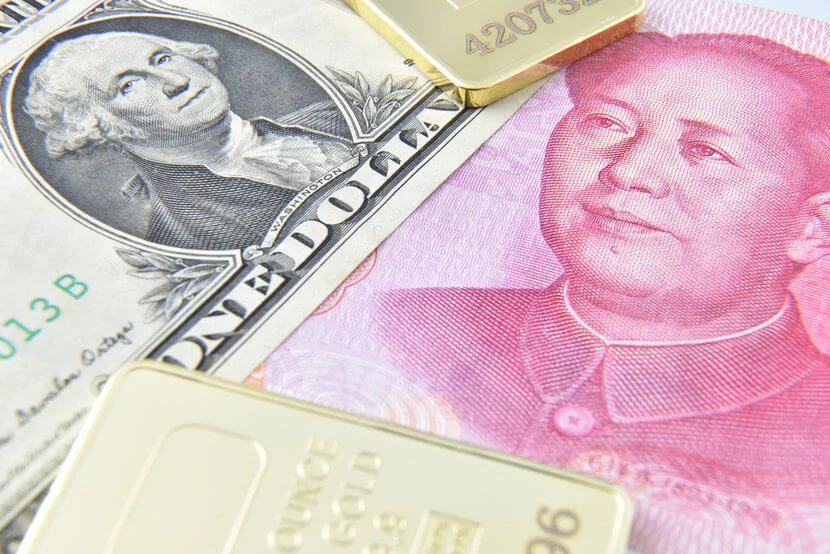
International transactions often involve the dollar even when neither party is in the United States.
“A country may exchange its currency for dollars to pay another country, which then exchanges those dollars for its own currency. Paying more directly could eliminate steps and reduce costs,” Moy says.
Some members also want less exposure to U.S. financial restrictions. Their reasons for exploring alternatives to the dollar are not identical, Moy says, and agreement on a broad goal does not mean they agree on how to achieve it.
Does de-dollarization threaten the dollar now?
De-dollarization describes efforts to reduce reliance on the dollar in trade, payments, or reserves. Moy considers those efforts serious but says their impact so far has been limited.
The dollar remains deeply embedded in global finance. According to the Bank for International Settlements, it was on one side of 89% of foreign exchange trades in April 2025. The International Monetary Fund reported that dollars accounted for 57.13% of disclosed global foreign exchange reserves in the first quarter of 2026. These measures describe different activities, but both show the dollar’s continuing reach.
Moy is watching the longer-term possibility that reduced demand for dollars could affect U.S. borrowing costs and the broader economy. “For now, the New Delhi Declaration records discussions and encourages further work on payment systems,” Moy says. “It does not establish how much trade will move away from the dollar or how quickly.”
Why does gold figure into the discussion?
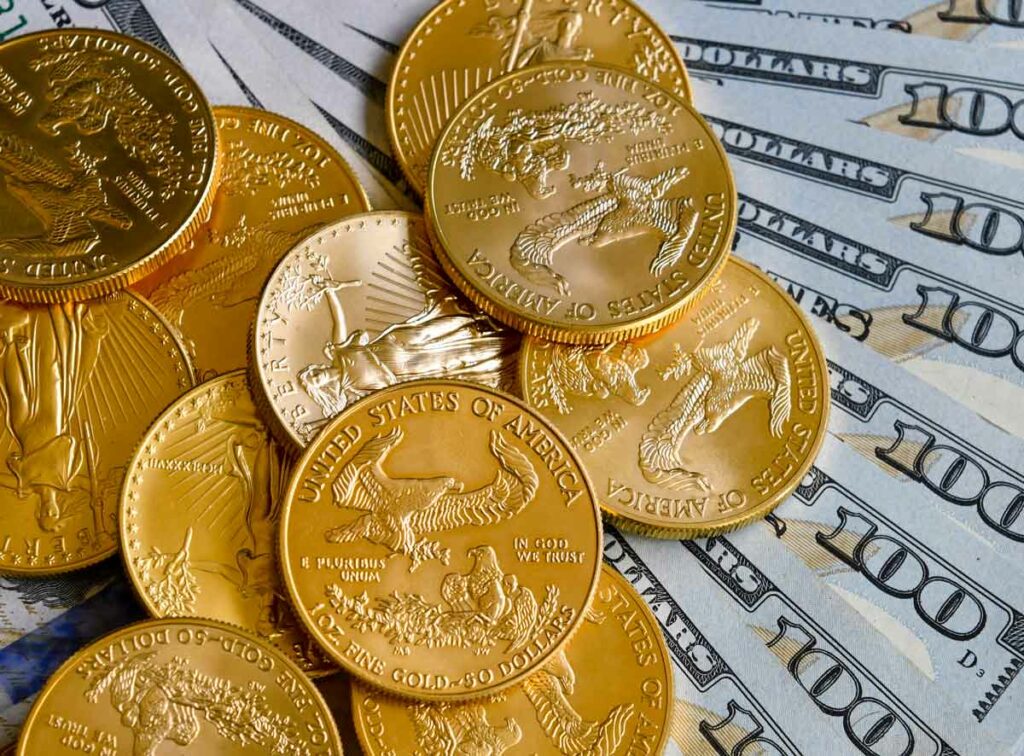
Gold is a reserve asset that countries can hold without relying on another country’s currency. Moy says that quality becomes especially relevant when governments want more financial flexibility amid geopolitical uncertainty.
Central banks have continued to add gold to their reserves, though buying varies by country and year. The World Gold Council reports that central banks purchased a net 863 metric tons in 2025. It describes demand as historically elevated and geographically widespread, while noting that buying slowed from its recent pace.
Moy also points to longer-term forecasts for gold. “Yardeni Research has projected that gold could reach $10,000/oz. by the end of the decade. That is a projection, not a certainty or a direct consequence of BRICS’ plans,” he says.
For individuals, Moy sees a related reason to consider gold: It is widely recognized and can provide a source of diversification beyond stocks, bonds, and cash. Gold prices can still rise or fall, and BRICS policy is only one possible influence. Interest rates, inflation expectations, currency movements, and demand from other buyers also matter.
What happens next?
The practical developments to watch are whether BRICS members put new payment arrangements in place, how widely those arrangements are used, and whether central banks continue adding gold to their reserves. Those outcomes will reveal more than a summit statement alone.
Moy’s central point is that the dollar remains dominant even as more countries explore ways to rely on it less. Gold’s potential role in a changing financial system comes from its use as a reserve asset and a portfolio diversifier. Neither a shift in trade practices nor a price forecast guarantees what gold will do next.
Questions? Don’t hesitate to contact a U.S. Money Reserve Account Executive. Call (866) 646-8465, and we’ll be happy to help.