
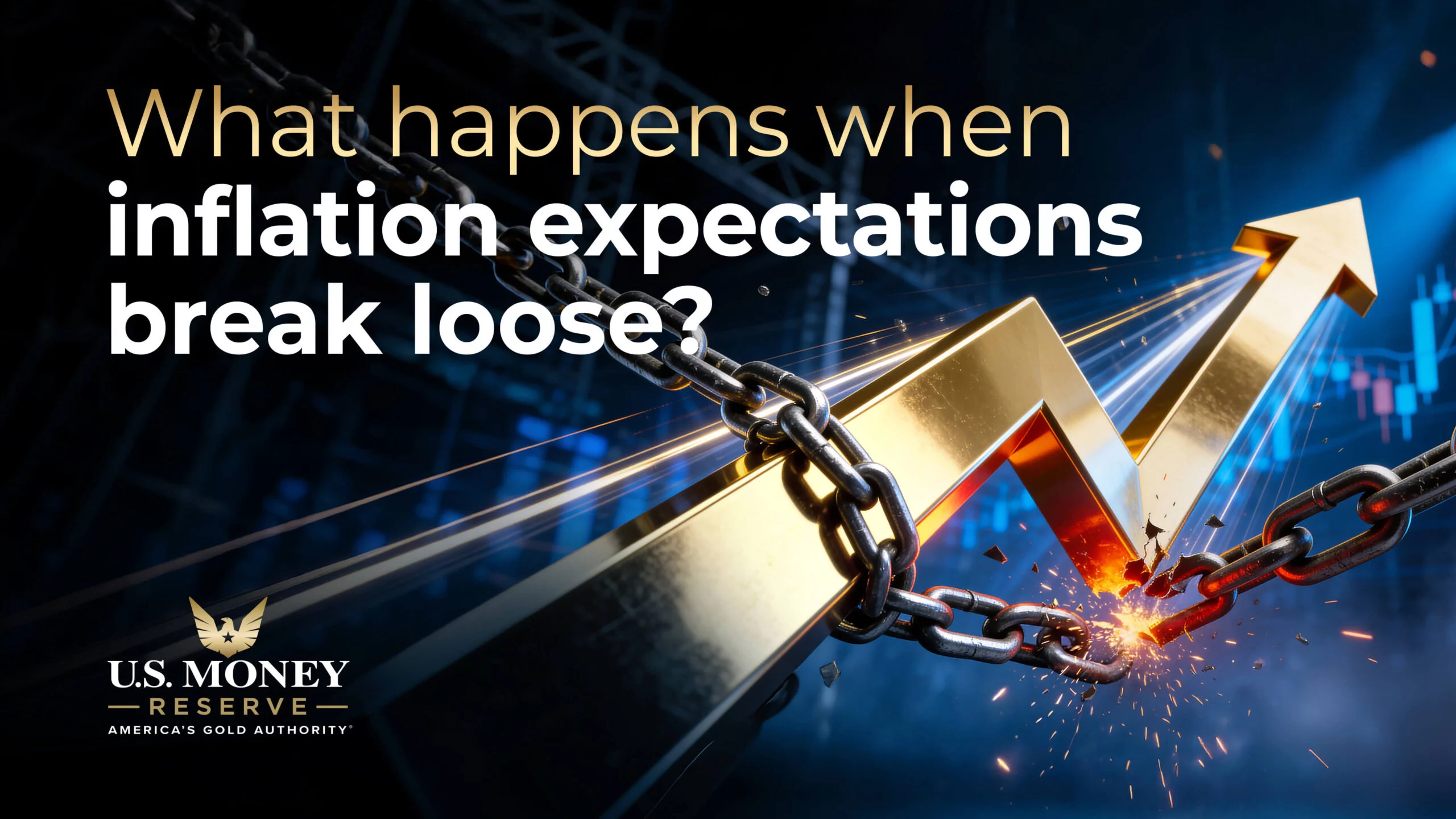
Moderate inflation is considered a normal part of a growing economy. The danger emerges when it remains elevated long enough to change expectations and influence wages, prices, spending, and policy.
That risk is the focus of a recent episode of America’s Gold Authority Podcast. Host Mike Barnes speaks with U.S. Money Reserve President and former U.S. Mint Director Philip N. Diehl and Global Head of Research Brad Chastain about how inflation expectations become entrenched and why the consequences can extend beyond higher prices.
Watch the Podcast Off the Chain: What Happens When Inflation Expectations Break LooseWhy does the Federal Reserve target 2% inflation?
“Inflation is not inherently harmful,” Diehl says. “A moderate, stable rate can support economic activity, while deflation—a sustained decline in prices—can discourage spending and weaken growth.”
The Federal Reserve formally adopted a 2% longer-run inflation goal in 2012, seeking price stability while preserving some protection against deflation.
“When the public trusts that inflation will return to the central bank’s goal, a temporary price shock is less likely to change long-term decisions,” Diehl says. “When people expect elevated inflation to persist, however, their behavior may help sustain it.”
Inflation is still running above the Fed’s goal.
The latest data shows why the issue remains unsettled. The Consumer Price Index rose 3.4% during the 12 months ending in July 2026, according to the U.S. Bureau of Labor Statistics. Food prices increased 3%, and energy prices rose 14.7%. The Federal Reserve’s preferred Personal Consumption Expenditures Price Index was up 3.7% year over year in June, while core PCE inflation—which excludes food and energy—was 3.3%.
“The prices that consumers really focus on are often the ones they encounter at the grocery store or gas pump,” Diehl says. “Even when economists see improvement in one measure, households may feel little relief if the prices most visible in their daily lives remain elevated.”
Labor data adds another layer. The unemployment rate held at 4.1% in July, but nonfarm payroll employment declined by 23,000. Real average hourly earnings fell 0.2% year over year, helping explain why a resilient economy can still feel stagnant to many households.
When do inflation expectations become dangerous?
No single indicator can answer that question. Analysts examine consumer and business expectations, market-based measures, wages, productivity, and other signals.
Expectations become especially concerning when households and businesses act on the assumption that elevated inflation will continue. Workers may seek higher pay to compensate for expected price increases. Businesses facing higher labor and input costs may raise prices. If those actions repeatedly reinforce one another, a wage-price spiral can develop.
That does not mean such a spiral is underway now. The Federal Reserve’s July 2026 Monetary Policy Report says most measures of longer-term inflation expectations remain well-anchored. Minutes from the Federal Open Market Committee’s July meeting likewise say market- and survey-based measures of longer-term expectations remained anchored.
Current inflation is above the Fed’s goal, but the long-term anchor has not clearly broken. The risk is that prolonged inflation could gradually weaken confidence in the Fed’s ability or willingness to restore price stability.
Could persistent inflation lead to stagflation?
“Stagflation combines elevated inflation with weak economic growth and deteriorating employment,” says Chastain. “Raising interest rates may restrain inflation but further weaken the economy, while lowering rates to support growth may add to inflationary pressure.”
Diehl says the United States is not currently experiencing stagflation, but he is concerned about its direction. Inflation remains elevated, hiring has softened, and real hourly earnings have slipped, although the Atlanta Fed’s GDPNow model estimates strong third-quarter growth.
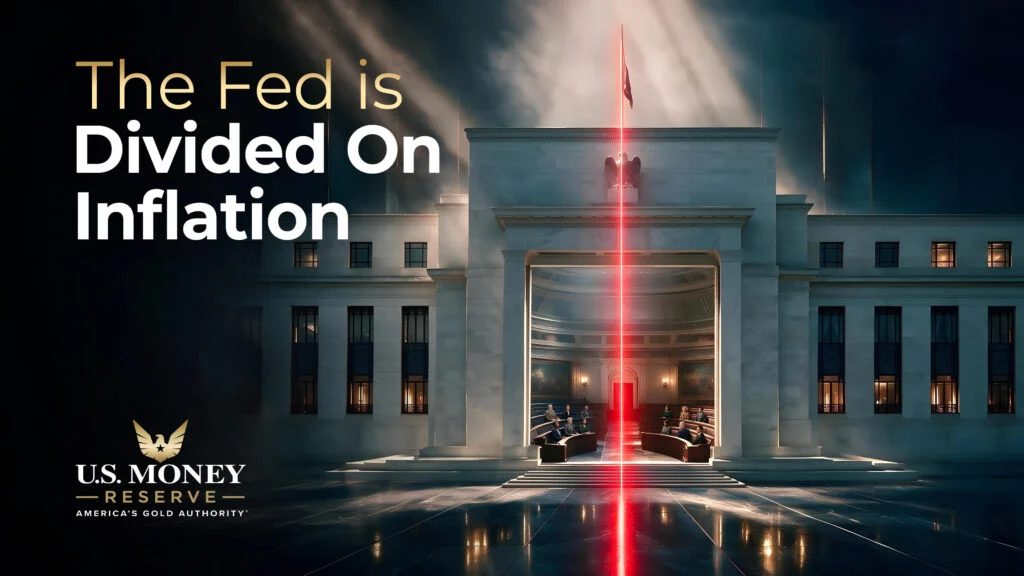
At its July meeting, the Federal Open Market Committee voted 9–3 to hold the federal funds target range at 3.5% to 3.75%, with three members preferring a quarter-point increase. The disagreement reflects the tension between addressing inflation and protecting employment and growth.
Rising debt can make monetary policy more complicated.
U.S. gross national debt crossed $40 trillion in August 2026, while interest expense reached approximately $1.17 trillion for the fiscal year to date. As debt and interest costs rise, rate changes have larger budgetary consequences.
Chastain connects this problem to “fiscal dominance,” in which fiscal conditions constrain monetary policy. “Raising rates can restrain inflation but increase federal refinancing costs. Holding them lower may ease financing pressure while allowing inflation to remain elevated,” he says.
The Federal Reserve has not necessarily lost control, but large deficits and rising interest costs can narrow its room to maneuver.
Why does this environment matter for gold?
“Gold has historically drawn attention when confidence in currencies, monetary policy, or the financial system comes under pressure. Its price can rise or fall, but physical gold exists outside stocks, bonds, and bank deposits,” says Diehl.
Central banks continue to hold and acquire gold. According to the World Gold Council, central banks accumulated more than 1,000 metric tons annually in each of the three years through 2024—well above the 400- to 500-ton annual average of the preceding decade. Its 2026 survey found that central banks remained positive about gold amid continued geopolitical and economic uncertainty.
“Inflation alone does not guarantee a higher gold price,” Chastain says. “Rather, persistent inflation, high debt, policy uncertainty, and concern about purchasing power can strengthen the case for holding assets that do not depend on the performance of a single company, government, or financial institution.”
Watch the trend, not just the latest number.
Monthly inflation reports are snapshots. The larger story is whether inflation is receding, wages are keeping pace, the labor market is weakening, and the public still believes the Fed can reach its goal.
For now, long-term expectations appear anchored. That is encouraging—but it should not be taken for granted. Once expectations begin driving decisions throughout the economy, restoring price stability can become far more difficult and painful.
Savers do not need to predict the next inflation report or Fed decision. They can build a diversified strategy designed for a range of economic outcomes. To learn more about physical precious metals and their potential role in a diversified portfolio, request U.S. Money Reserve’s free Gold Ownership Guide.
Free Guide Get Your Free Gold Ownership Guide