
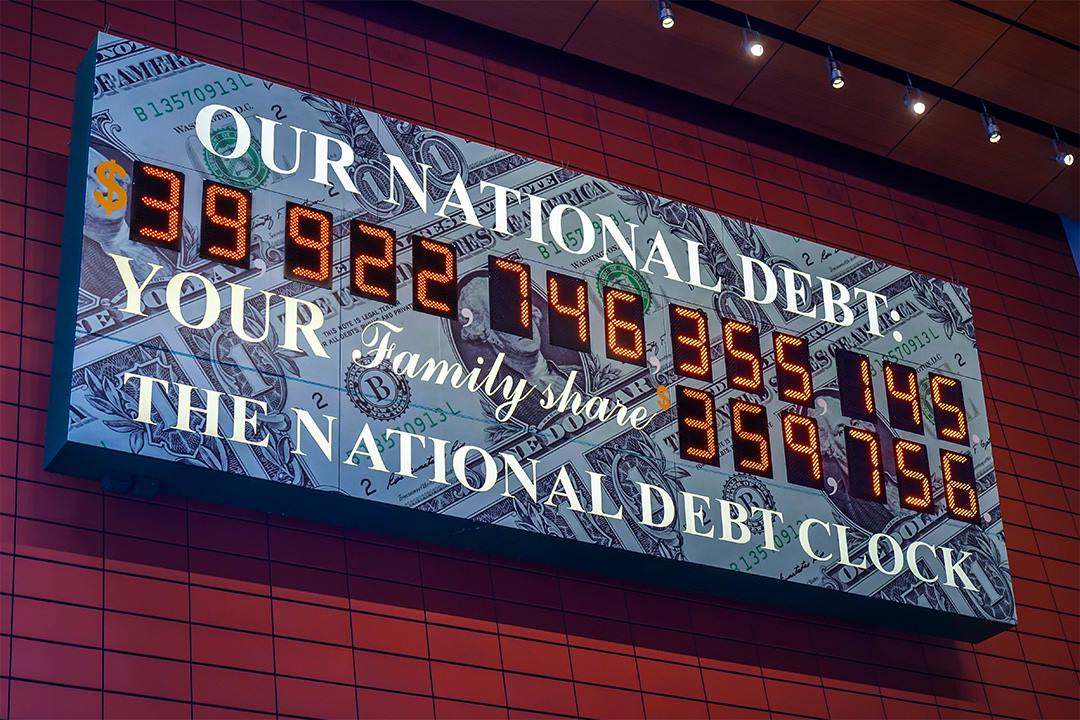

America’s national debt is closing in on $40 trillion, and the growing cost of carrying that debt is raising questions about what persistent government borrowing could mean for the economy and for American consumers.
The federal debt stood at roughly $39.8 trillion at the end of July, up more than $2 trillion from the end of 2025, according to Treasury data. The annual federal deficit reached $1.8 trillion through the first 10 months of fiscal 2026, according to the Congressional Budget Office. At the same time, interest on the debt has become one of the government’s largest expenses, creating a cycle in which persistent deficits require more borrowing—while the larger debt leaves taxpayers responsible for a growing interest bill.
Greg Fleming, chief executive officer of Rockefeller Capital Management, points to the fiscal situation as his biggest concern for the U.S. economy, warning that persistent deficits are becoming a structural risk that could reshape the economy for years.
For the average American, the concern is how this reshaping could affect household finances. Heavy government borrowing puts upward pressure on longer-term interest rates, making mortgages, auto loans, and other forms of credit more expensive. Rising interest expenses could also reduce funds that might otherwise be available through government programs, and federal efforts to address large deficits through higher taxes or reduced spending could eventually affect household budgets.
Persistent deficits and rising debt are also drawing attention to gold. Concerns about inflation, the dollar’s purchasing power, and Washington’s fiscal outlook have historically strengthened demand for physical gold. According to John Ing, president of investment bank Maison Placements Canada, those forces could soon push gold prices toward $6,000/oz.