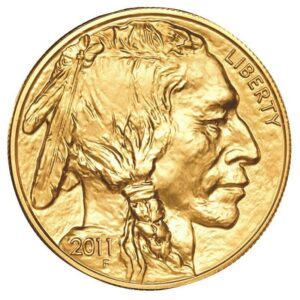


Should you buy gold now or wait until after the midterms? History offers reasons to consider acting sooner, but gold’s outlook extends beyond the election calendar. Whatever shape Congress takes, the economic pressures affecting Americans’ savings won’t automatically disappear when the votes are counted.
Gold has followed different paths during midterm election years. From 1970 through 2022, gold gained an average of 14.9% during midterm election years, compared with 0.6% for stocks.

Those averages don’t describe every election cycle, but more recent history offers another pattern worth considering: In four of the five midterm election years between 2006 and 2022, gold prices rose from October to November. Gold also dipped ahead of the 2018 and 2022 elections before rising after Election Day.
Economic pressures extend beyond the ballot box.
Elections are only one factor influencing gold prices. Continued conflict involving Iran could disrupt energy supplies and push fuel prices higher, adding to inflation and uncertainty. Meanwhile, heavy technology concentration in the S&P 500 could leave retirement portfolios exposed to an AI-driven sell-off—even for people who own a broad mix of stocks.
Federal deficits and debt present another challenge. Continued borrowing adds to the national debt, while refinancing existing debt at higher rates could increase interest costs and put more pressure on the federal budget. Higher consumer prices also erode what savings can buy, making purchasing power an ongoing concern.
A change in congressional control could bring new disputes over spending and economic policy, complicating Washington’s response to these challenges. These broader forces can influence demand for gold.
Major financial institutions see potential for higher prices.
In both 2018 and 2022, gold dipped ahead of the midterm elections before rising, creating a potential buying opportunity. That pattern may be repeating: Gold is down from its January high, and analysts expect prices to rise by year’s end:
- Goldman Sachs: $4,900/oz. year-end 2026 forecast, with additional upside possible¹
- Wells Fargo: $4,900–$5,100/oz. year-end 2026 target²
- J.P. Morgan: $4,500/oz. fourth-quarter 2026 average forecast, with a bullish outlook for further gains in 2027³
[chart: Gold’s Performance: Midterm Election Years]
Consider your savings goals beyond Election Day.
For Americans considering physical gold, the decision involves more than predicting an election outcome. Savings goals, existing holdings, time horizons, and exposure to economic uncertainty all deserve consideration.
Physical gold offers something tangible to own beyond stocks and bonds—a long-term diversification option that may help protect savings from economic uncertainty. The historical patterns and economic pressures offer reasons to explore gold’s role before Election Day and beyond.
1 “Gold Is Forecast to Climb as Central Banks Buy the Precious Metal,” Goldman Sachs, Aug. 2026
2 “Gold retreats from 3-month high Tuesday, but this bank still sees further upside in the yellow metal,” MarketWatch, Aug. 2026
3 “JP Morgan says weaker demand may cap gold gains near-term, sees rebound in late 2026 and 2027,” Reuters, July 2026