
As the U.S. piles on debt and economic red flags multiply, central banks around the world are snapping up gold at historic levels.
In May 2025 , the United States posted a $316 billion deficit, according to the Treasury Department, pushing the year-to-date-total for the fiscal year 2025 to $1.36 trillion. Meanwhile, interest on the $36.2 trillion national debt hit $92 billion—more than any federal expense except Medicare and Social Security. Wall Street heavyweights like JPMorgan CEO Jamie Dimon and BlackRock CEO Larry Fink are warning that this kind of borrowing is unsustainable, especially in peacetime.
The economy is also entering choppy waters. Job growth is slowing—just 139,000 jobs were added in May—and businesses are putting hiring and investment on hold. The Wall Street Journal reports that companies like UltraSource and Titan Steel are being slammed by escalating tariffs, with millions in unexpected costs. Housing is sputtering too, with Redfin data showing nearly 500,000 more sellers than buyers and the worst spring sales season in over a decade.
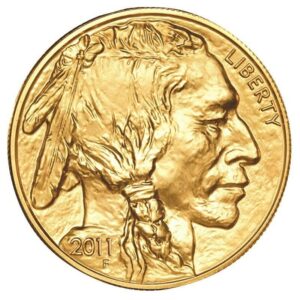
Amid all this, gold is regaining its shine. According to a new estimate by Goldman Sachs, central banks are buying up 80 metric tons of gold per month—roughly a quarter of all gold mined annually. Many of these purchases are undisclosed, but trade data suggests China is a major buyer. The World Gold Council notes that buying surged after the United States froze Russia’s foreign reserves in 2022, pushing many countries to rethink their dependence on the U.S. dollar.
“Gold is the safest reserve asset,” said Poland’s central bank governor, Adam Glapinski.
Tensions in the Middle East have added another spark. After Israel launched airstrikes on Iranian nuclear and military targets, gold prices jumped as demand for safe-haven assets rose. Iran responded with a wave of drones and threats of broader retaliation, fueling fears of a wider regional conflict. With markets already on edge, gold is increasingly being viewed as a shield—not just from geopolitical unrest, but also from persistent inflation and growing financial volatility.
With gold trading around $3,360/oz. and Goldman predicting $3,700/oz. by year-end, the market is clearly betting on more instability ahead. And according to JPMorgan, even a tiny reallocation—just 0.5% of global U.S. dollar holdings—could push gold to $6,000/oz. by 2029.