Episode 5
The Dollar Debt Trap—Why the System Demands More Money, and What You Can Do About It
In a powerful episode of America’s Gold Authority® Podcast, host Remmy Castillo is joined by Philip Diehl, former Director of the U.S. Mint and former Chief of Staff at the U.S. Treasury; Brad Chastain, Director of Education at U.S. Money Reserve; and Sales Director Patrick Brunson to explore one of the most urgent financial issues […]
Episode notes
In a powerful episode of America’s Gold Authority® Podcast, host Remmy Castillo is joined by Philip Diehl, former Director of the U.S. Mint and former Chief of Staff at the U.S. Treasury; Brad Chastain, Director of Education at U.S. Money Reserve; and Sales Director Patrick Brunson to explore one of the most urgent financial issues of our time: the Dollar Debt Trap.
A Debt-Based Monetary System by Design
Brad opens by breaking down the heart of the issue: the U.S. dollar—and nearly all global currencies—operate on a debt-based system. In this system, money is created when banks issue loans. But because that debt must be repaid with interest, the economy is locked in a cycle of needing to constantly create more money just to stay afloat.
This isn’t an anomaly—it’s how the system is designed to function. “More [money] must be created to pay back what was never issued,” explains Brad. That means every crisis leads to more debt creation, more money printing, and a ballooning global money supply.
The Numbers Behind the Crisis
With the United States holding over $36 trillion in national debt—almost 40% of the global total—many Americans are growing desensitized to what that figure truly means. Yet the implications are staggering. According to Brad, roughly three out of every four dollars in the financial system are used just to refinance existing debt, leaving only one dollar to support actual economic growth and innovation.
Even more alarming: interest payments on U.S. debt have now surpassed our nation’s annual defense budget, a sobering signal of how much debt service has consumed public finances.
Global Ramifications: The Dollar’s Double-Edged Sword
The dollar’s unique position as the global reserve currency means that when it strengthens, it creates ripple effects worldwide. Foreign nations that hold debt denominated in dollars must print more of their own currency to keep up—feeding into a cycle of global inflation.
“If the dollar gets too strong, the world breaks,” says Brad, referring to past crises like 2008, when a global shortage of dollars created a credit crunch. These events are exacerbated by volatility in the dollar’s value, prompting nations to consider alternatives—though the dollar remains dominant for now.
Is Confidence in the Dollar Starting to Crack?
Patrick points out that many nations are actively reducing their exposure to the dollar, using reserves to purchase gold instead. “That tells you a lot about what they think the future of the dollar might look like,” he notes. While Philip acknowledges the dollar is still stronger than its global peers, he warns that public confidence—especially at home—is beginning to erode.
And that loss of trust is the real risk.
How Gold Fits Into the Picture
So, what can consumers do? The panel agrees: diversification is key. While stocks, bonds, and cash still play important roles, they can’t shield a portfolio from systemic monetary inflation.
Gold, on the other hand, has kept pace with the expanding money supply. As a tangible asset, it isn’t subject to the risks of digital manipulation or central bank overreach. “Gold is a hedge against the exponential growth of debt,” Brad explains. And in today’s uncertain environment, more Americans are turning to physical gold as both a stabilizing force and a long-term store of value.
Final Thoughts
The Dollar Debt Trap isn’t just a financial issue—it’s a structural one, embedded in the way our economy operates. With rising debt, increasing inflation, and a shrinking margin for error, consumers need tools that offer stability, resilience, and trust.
Call U.S. Money Reserve to learn how gold can help you navigate financial uncertainty—and protect what matters most.

Ready to protect your savings? Get your free guide today.
Get your free guideKeep listening
Related episodes
- Episode 4How New Tariffs Could Hit Your Wallet—and Why Gold May Be Your Best Hedge
As tariffs take center stage in U.S. policy discussions, concerns about their long-term economic impact are rising. In a recent episode of America’s Gold Authority® Podcast, host Remmy Castillo sat down with three experts—Philip Diehl, former Director of the U.S. Mint and Treasury Chief of Staff; Brad Chastain, Director of Education at U.S. Money Reserve; […]
Listen now - Episode 6Navigating an Unstable Global Outlook—Why Gold Matters More Than Ever
In the latest episode of America’s Gold Authority® Podcast, host Remmy Castillo sits down with three experts—Philip Diehl, former U.S. Mint Director and former Chief of Staff at the U.S. Treasury; Brad Chastain, Director of Education at U.S. Money Reserve; and Sales Director Patrick Brunson—to break down the complex geopolitical and economic forces shaping today’s […]
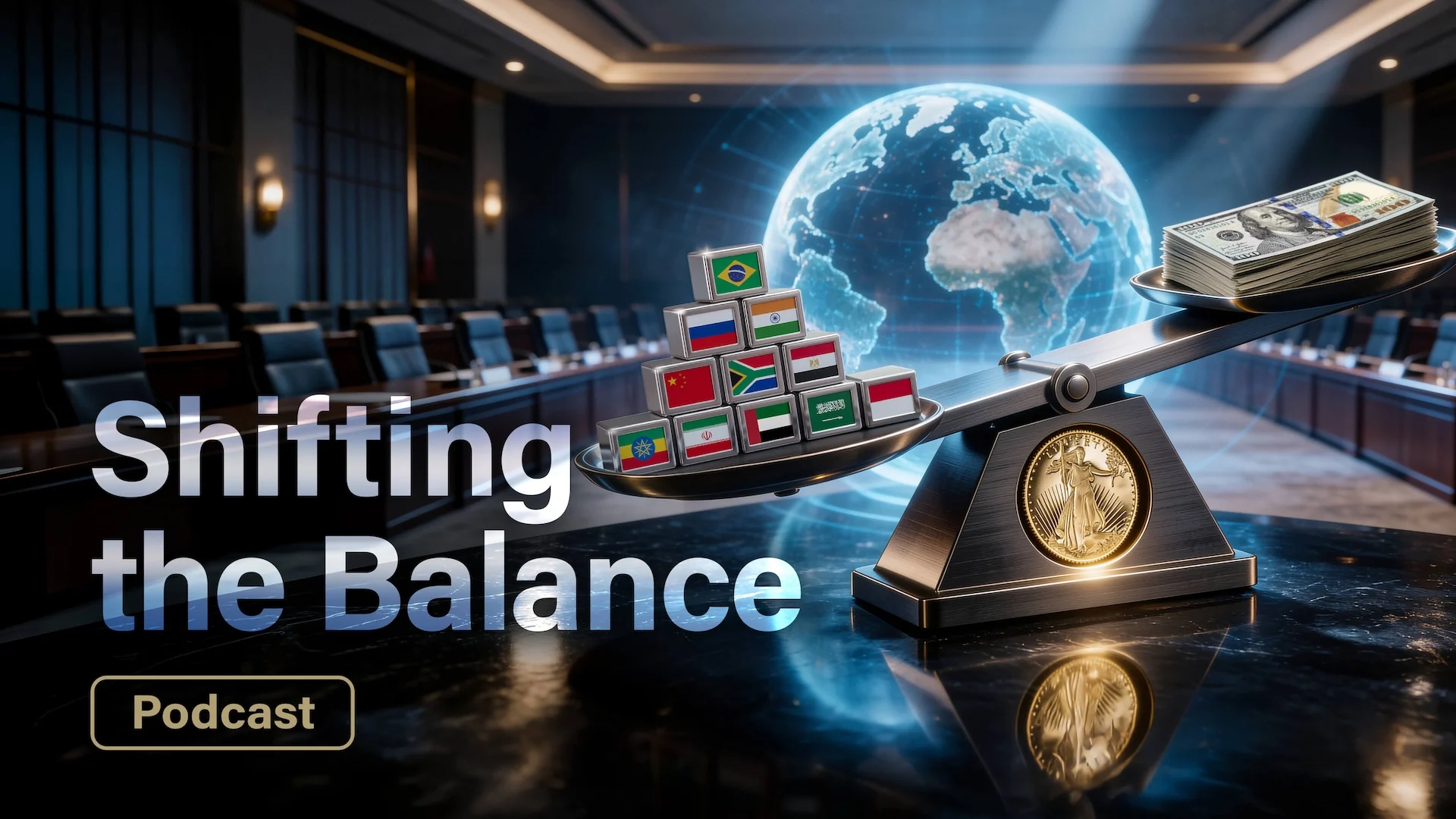
Listen now - Episode 81Shifting the Balance: BRICS, the Dollar, and the Future of Gold
BRICS is becoming an increasingly important force in the global economy as its members seek greater influence over international trade and finance. With the coalition now encompassing 11 countries, its efforts to build a more multipolar financial system could have significant implications for the U.S. dollar and gold.
Listen now