Episode 54
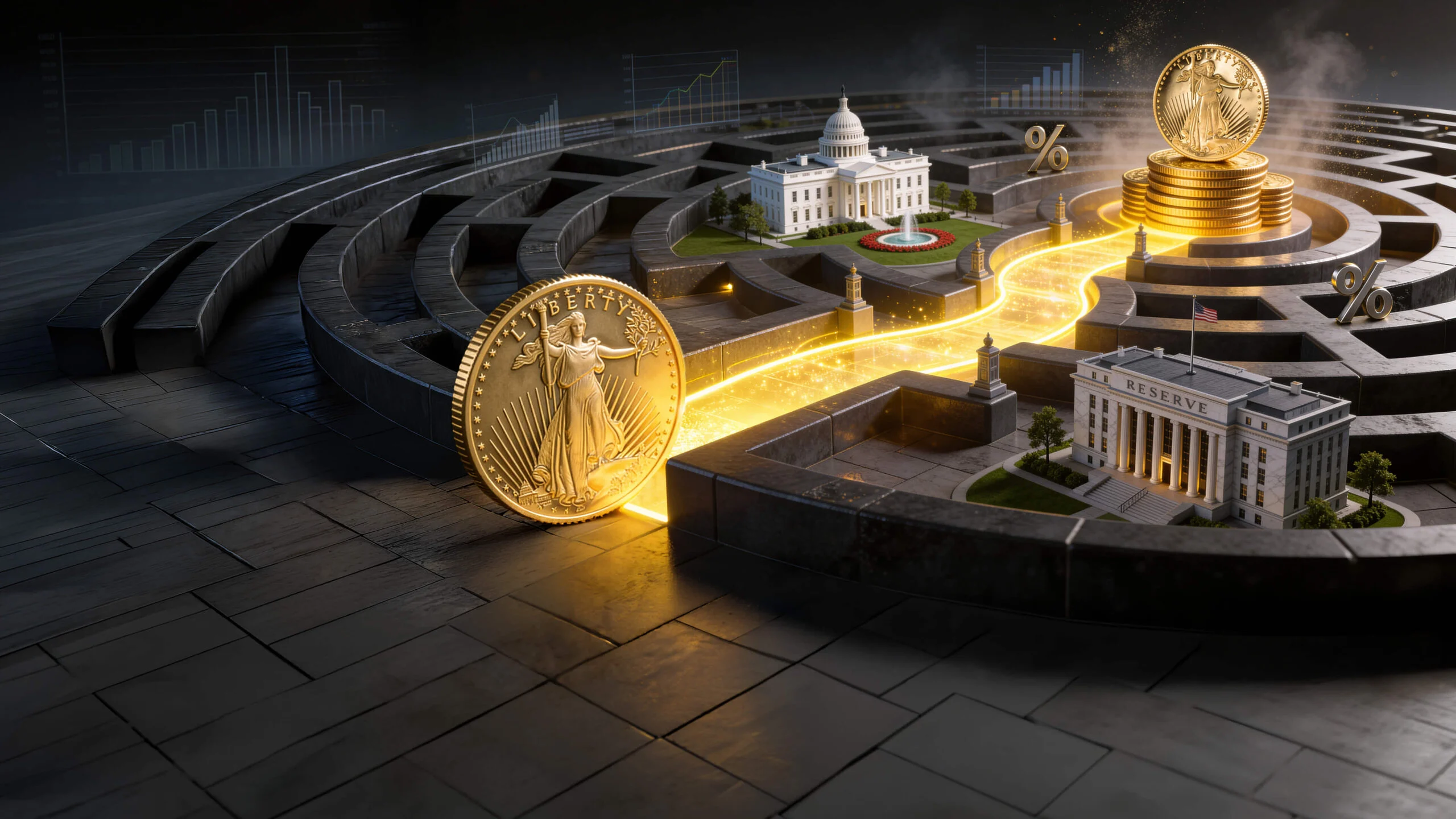
Gold’s Path Forward: Interest Rates and the Bigger Picture
On this episode of America’s Gold Authority® Podcast, host Mike Barnes is joined by Philip N. Diehl, President of U.S. Money Reserve and former Director of the U.S. Mint, to examine how interest rate policy, inflation pressures, and global uncertainty are shaping gold’s outlook.
Episode notes
On this episode of America’s Gold Authority® Podcast, host Mike Barnes is joined by Philip N. Diehl, President of U.S. Money Reserve and former Director of the U.S. Mint, to examine how interest rate policy, inflation pressures, and global uncertainty are shaping gold’s outlook.
They break down why the Federal Reserve is holding rates steady as it faces competing risks—rising inflation tied to energy and supply disruptions, alongside growing concerns about a potential economic slowdown. The discussion explores how higher oil prices, tariff uncertainty, and global supply chain stress are complicating the Fed’s ability to act and raising the possibility of stagflation.
Diehl also discusses the unusual dynamic between gold and the U.S. dollar, explaining why gold has recently faced short-term headwinds as demand for dollars rises to secure critical global resources. He outlines why this trend may be temporary, and how similar periods of consolidation have historically set the stage for gold’s next upward move.
Looking beyond near-term volatility, the episode highlights the broader forces supporting gold’s long-term trajectory—including central bank demand, rising global debt, and growing uncertainty around financial markets and emerging technologies. With record levels of gold buying from central banks and continued pressure on traditional paper-based assets, the discussion offers a clear perspective on why gold remains a key component in preserving and growing wealth.
U.S. Money Reserve is widely known as one of the country’s largest private dealers of government-minted gold, silver, platinum, and palladium. It’s the only precious metals firm led by two former U.S. Mint Directors, giving the company unrivaled institutional insight. Having served more than one million customers and processed over $4.4 billion in transactions, U.S. Money Reserve is widely trusted for helping Americans safeguard their financial future. Tune in to America’s Gold Authority® Podcast and request your FREE Gold Ownership Guide by calling 833-201-3673.
Read the full transcript
MIKE BARNES 0:10
Welcome to America’s Gold Authority Podcast. My name is Mike Barnes. The Federal Reserve has decided not to touch interest rates. Is that the right move with the geopolitical uncertainty out there? And how does that affect you? Let’s talk with Philip Diehl, 35th Director of the United States Mint and President of U.S. Money Reserve. And Philip, let’s get right to it. There’s lots of uncertainty about the economy right now. What needs to be done?
PHILIP N. DIEHL 0:34
The Fed finds itself between a rock and a hard place right now. First of all, we saw uh the increase in tariffs and then the uncertainty about tariffs. Really uh increase uncertainty about the economy and what uh which way prices were likely to head. We’ve seen some evidence, not a lot, uh not strong evidence, but some evidence that in fact prices have been itching up a little bit. Uh there uh we certainly haven’t seen the progress that we hope to see toward the Fed’s 2% uh target rate. And so um the general consensus was the Fed was moving away from reducing interest rates as aggressively as we had hoped for in 2026. And now that we’re seeing uh oil prices spike upward, and overnight they were they went up very dramatically, um, that will add fuel to the fire, if you will, of inflation and concerns about inflation. And in that circumstance, the Fed is very unlikely to cut rates as aggressively as we had hoped this year. In fact, I think the general consensus is that we might see a 25 point of reduction in the uh federal funds rate this year, toward the end of the rear year, but uh you know, cuts of that size, two or three of those, are highly unlikely. So we have the concern on the inflation side, but at the same time, we have increasing concerns. And uh some of the economists that I follow, who have a great track record, uh, are now uh increasing their odds of an in of a recession to 35 to 50 percent this year, as a result of higher um interest rates than expected, and also higher oil prices, higher uh pharmaceutical, uh petrochemical, aluminum prices, even fertilizer prices, all of which are highly dependent on uh production in the Persian Gulf region, and whose supplies are being interrupted by uh Iran’s threat to uh target ships passing through the uh through the Strait of Hormuz. So uh this really does put the Federal Reserve in a bind between its two mandates to uh to keep uh employment up and to keep inflation down. Um and so uh it this this is really a situation called stagflation, which we are concerned about both stagnation of the economy and the increase in inflation. So the Fed’s in a tough place about how to fight them both at the same time.
MIKE BARNES 3:45
Jerome Powell basically acts like nobody knows what’s going to happen with the economy, especially because of the oil price spikes. But haven’t we kind of been through this before in the past, with oil going up, with interest rates fluctuating and maybe needing to go down to help the economy?
PHILIP N. DIEHL 4:01
Yes, we’ve we’ve seen this before back in the uh in the 70s and early 80s. Uh so it’s been a long time. And the nature of the economy, the global economy, and the U.S. economy has transformed dramatically in that period of time. Uh on the one hand, we have we’re in a better shape because the U.S. and the and the world economy is less dependent on oil than it has been in the past uh at that time. But on the other hand, we are uh in a more precarious situation, I think, with uh the current conflict in the Middle East. Uh this is uh evolving rapidly. We did not have a situation in which the Persian Gulf itself was uh within the realm of conflict, where the Strait of Hormuz was being threatened, and where there were such global supply chains that were at risk. The whole world economy is so much more integrated today and more dependent upon uh trade and and uh just-in-time supplies of raw materials to the manufacturing processes all over the world. And we saw the power of this sort of disruption in the world economy uh during the COVID pandemic and in the wake of the COVID uh pandemic, and the impact those disruptions had on inflation in the world economy. So uh I think we are in a more precarious situation now than we were 55 years ago or so uh during the uh oil era oil embargo of the 70s.
MIKE BARNES 5:54
We saw a couple of interest rate cuts back in the fall of 2025. Officials are expecting only one this year in the calendar year of 2026, but Powell is going to be leaving office in May and Kevin Warsh is gonna be taking over. Do you think that’s going to affect things here? Is there some uncertainty there?
PHILIP N. DIEHL 6:10
Yeah, there’s some uncertainty. There’s even uncertainty about whether or not Powell’s going to be leaving in May. Uh he did he announced he will not leave until the Department of Justice investigation of him, criminal investigation of him, is concluded. And um so that really kind of paints the president into a corner. Uh he’s almost desperate to get uh control of the Federal Reserve so he can cut interest rates. Uh and uh the law allows Powell to stay as chairman until his uh successor is confirmed by the Senate. And so uh and the Senate isn’t even moving on uh the confirmation of his successor because a key Republican senator has said that he won’t allow the nomination to move forward as long as this investigation is underway. Um, also, we have a situation where uh PAL is has announced that he intends to stay on uh the Federal Reserve Board after his um after his uh successor is confirmed. He has the right to do that until 2028. And by doing so, he would deny the president the ability to appoint someone who could be the decisive vote on lowering interest rates. And then there’s a third level of uncertainty. You made reference to the three cuts in interest rates that occurred um uh about a year ago, a little year ago or so. And um interest rates did not go down with the cut in those rates. The really the longer-term interest rates that drive the economy, for example, the 10-year treasury uh interest rate did not decline despite those cuts. And the reason for that was the market, which determines those rates, not the Federal Reserve, the market was concerned that those rate cuts could actually increase inflation. So, in the face of that concern, they didn’t lower interest rates. Um, and so even in a situation in which the Federal Reserve were to increase interest rates uh later in the year, if the market isn’t convinced that the economy warrants those cuts in interest rates, then we could we could see interest rates remain at these elevated levels and even increase.
MIKE BARNES 8:56
Interesting because President Trump is quoted as saying, again, quoting him, a third grader would cut rates by now. But apparently it’s not as simple as that because there are pluses and minuses if you cut the rates.
PHILIP N. DIEHL 9:07
Well, he might be right. A third grader might have uh might uh cut them. But fortunately, we don’t put third graders on the Federal Reserve Board. And um and so uh yeah, it’s not that simple. It’s a complicated situation where um uh where the Federal Reserve uh can’t simply follow the president’s instructions and lower long-term interest rates, and that’s what the the president is really aiming for, is a reduction in the 10 uh in the 10-year Treasury uh bill rate, because that’s the rate that determines uh interest rates on mortgages, uh business loans, car loans, all the loans that really drive our economy. And the president is intent on lowering those uh rates, not only because it will stimulate the U.S. economy, but also it will improve his prospects and his party’s prospects in the midterm elections.
MIKE BARNES 10:12
With the rates staying the same and not going down, and with oil prices going up, it’s affecting the price of gold. And some um some experts are saying pricing of gold is hitting headwinds right now. Do you think that’s the case? And do you think it can overcome that?
PHILIP N. DIEHL 10:26
Yes, it’s absolutely the case. And I think some of the analysis of why, you know, the the reason for those headwinds is probably either wrong or overstated. There’s been a lot of talk, and traditionally, uh the dollar and gold have competed as the world’s safe havens in the face of geopolitical or economic uncertainty. And so there’s a lot of talk about how the dollar is reasserting itself over gold as that primary safe haven. Uh there may be uh some flight to safety in the dollar that’s going on, but I think what’s really happening is that we are seeing a rush for uh companies and countries to secure supplies of oil, natural gas, fertilizer, uh raw earth materials, aluminum, uh petrochemicals, all coming out of that region. That region provides 20 to 30 percent of the world supply of many of these materials. And uh in economies, companies shut down if they can’t uh get those supplies. And so we’re seeing a rush to secure those supplies, uh, those that have already gotten out of the Persian Gulf and have been sitting in uh container ships and in uh the big tankers around the world. And almost all of those commodities are bought and sold in dollars. And so there’s a rush to acquire the dollars in order to make those purchases. And I think that has provided a temporary boost to the dollar. And when the value of the dollar goes up, the price of gold also goes up because it’s sold in dollars as well. The price of gold goes up to anybody who’s using a currency other than the dollar, and of course, that’s much of the world, uh, especially in India and China, which are so heavily dependent upon the Middle East and in oil and gas and and other commodities. And so um, I think this is a temporary phenomenon. I don’t think there’s uh a growing confidence in the dollar. I think there’s a lot of concern around the world about U.S. policy making, uh, the direction of US policy, also sort of the erratic nature of U.S. policy. It’s become highly unpredictable. We especially saw that in the context of uh tariffs and trade policy last year. But we’re seeing it also in uh uh our long-term policies toward allies and also in the Persian Gulf. So I think uh I think that this is a temporary phenomenon. This isn’t the first time in the last two and a half years of this uh remarkable uh surge in gold prices, more than doubling, probably two and a half times over that period of time, where it’s outperformed stocks and bonds and and most other asset classes. During that period of time, we’ve seen gold move sideways for a period of time as it consolidates its value and then resume its relentless climb. And I think that’s what we’re seeing here too.
MIKE BARNES 14:15
Well, sometimes headwinds are just a bump in the road. I heard the analogy one time that planes need headwinds to take off, and maybe that’s what gold needs right now. So the long-term future of gold is still very bright.
PHILIP N. DIEHL 14:26
Yeah, it’s still very bright. And and we’re really right now, we’re you and I are just talking about uh really uh the the prospects for gold over the next year or two or three, depending on how long uh this current economic and geopolitical regime exists in the world where there’s so much uncertainty. But we’re looking at a situation where over the next decade, I’m absolutely convinced that gold is going to outperform stocks and bonds because of lots of forces, not just a few, many forces that are work uh in the world today are going to be driving gold prices upwards. AI is just one of those forces, one that’s getting a lot of attention right now because of all the uncertainty around artificial intelligence. An enormous amount of debt is being taken on by the artificial intelligence firms uh and those that are in the constellation of companies that are uh are implicated in AI. And uh and there’s a lot of questions now that are being raised about the ability of the industry to generate the profits necessary to pay back those loans. And also, so much of these loans are coming out of what’s called the shadow banking or private banking uh world, which is virtually totally unregulated. And we can’t, because it’s unregulated, we can’t view what’s actually happening and how vulnerable uh that sector of the financial market is. And that calls to mind the situation that we faced in uh in the months and years leading up to uh the great financial crisis, where uh increasing opacity of the financial sector made it very difficult for regulators to protect the economy from reckless kinds of practices that were going on in the industry. And I think there’s a lot of concern about whether or not that’s happening in the private banking sphere now.
MIKE BARNES 16:59
Well, you’ve mentioned in the past that it’s almost like a perfect storm for gold right now. And central banks see that, and because of that, the future looks good that it’s gonna keep going up despite a little hiccup right now.
PHILIP N. DIEHL 17:10
Yeah, that that’s right. Uh and it’s it’s important to keep your eye on what the central banks, the global central banks, are doing. Those are some really smart people, and they are investing in gold for the same reason that we urge our clients to buy gold. And that is they’re not looking to trade gold and make profits short term on gold. They are buying gold for the long term because they are convinced it is the best asset that they can hold in order to preserve the wealth of their nation. And that’s what we urge our customers to do: protect your wealth and grow your wealth with gold. Um, so what we’ve seen for the last four years now is a record-breaking demand for gold from the central banks over an average of over a thousand metric tons per year being purchased by uh the central banks. And they’re off to a good start again this year. I I don’t know that they’re gonna hit a a thousand metric tons because, of course, gold is more expensive now than it has been over the previous years. But the those those have really been smart purchases by the central banks because not only have they preserved their nation’s wealth, but they’ve seen this incredible increase in the value of their gold holdings over that period of time. So I think the central banks, in the in the face of all this economic and geopolitical uncertainty in the world, all these forces that are involved in this perfect storm, uh I think we’re gonna see them continue to buy and to benefit from their purchasing of gold.
MIKE BARNES 19:09
That is a lot of gold for the central banks. A great safe haven for them and for us. Philip Diehl, thanks so much for your insight today. Thank you, Mike. That is all the time we have for today’s episode. On behalf of all of us here in the U.S. Money Reserve Studios, I want to thank you so much for tuning in. If you have any questions or you want to learn more about today’s episode, you can call the number in our episode description and speak with one of the friendly account executives. They’re going to be more than happy to answer any questions you may have about precious metals and the strategic role they can play in achieving a secure and comfortable financial future. I’m Mike Barnes. We will see you next time on America’s Gold Authority Podcast.

Ready to protect your savings? Get your free guide today.
Get your free guideKeep listening
Related episodes
- Episode 55Window of Opportunity: A Strategic Entry Point for Gold
On this episode of America’s Gold Authority® Podcast, host Mike Barnes is joined by Philip N. Diehl, President of U.S. Money Reserve and former Director of the U.S. Mint, and Brad Chastain, U.S. Money Reserve’s Managing Director and Global Head of Research, to examine gold’s recent price drop and what it signals for buyers focused on the long term.
Listen now - Episode 53Oil Pressure: Energy Markets and Gold
On this episode of America’s Gold Authority® Podcast, host Mike Barnes is joined by Philip N. Diehl, President of U.S. Money Reserve and former Director of the U.S. Mint, to examine how the effects of surging oil prices and geopolitical tension are beginning to ripple through the global economy.
Listen now - Episode 68Market Opportunity: Why Gold’s Long-Term Case Endures
On this episode of America’s Gold Authority® Podcast, host Mike Barnes is joined by Philip N. Diehl, President of U.S. Money Reserve and former Director of the U.S. Mint, and Brad Chastain, U.S. Money Reserve’s Managing Director and Global Head of Research, to examine gold’s recent correction and why they believe the long-term bull market remains intact.
Listen now