Episode 57
Echoes of 2008: Risk Without Regulation
On this episode of America’s Gold Authority® Podcast, host Mike Barnes s joined by Philip N. Diehl, President of U.S. Money Reserve and former Director of the U.S. Mint, and Brad Chastain, U.S. Money Reserve’s Managing Director and Global Head of Research, to examine rising concerns in the rapidly expanding private credit market.
Episode notes
On this episode of America’s Gold Authority® Podcast, host Mike Barnes s joined by Philip N. Diehl, President of U.S. Money Reserve and former Director of the U.S. Mint, and Brad Chastain, U.S. Money Reserve’s Managing Director and Global Head of Research, to examine rising concerns in the rapidly expanding private credit market.
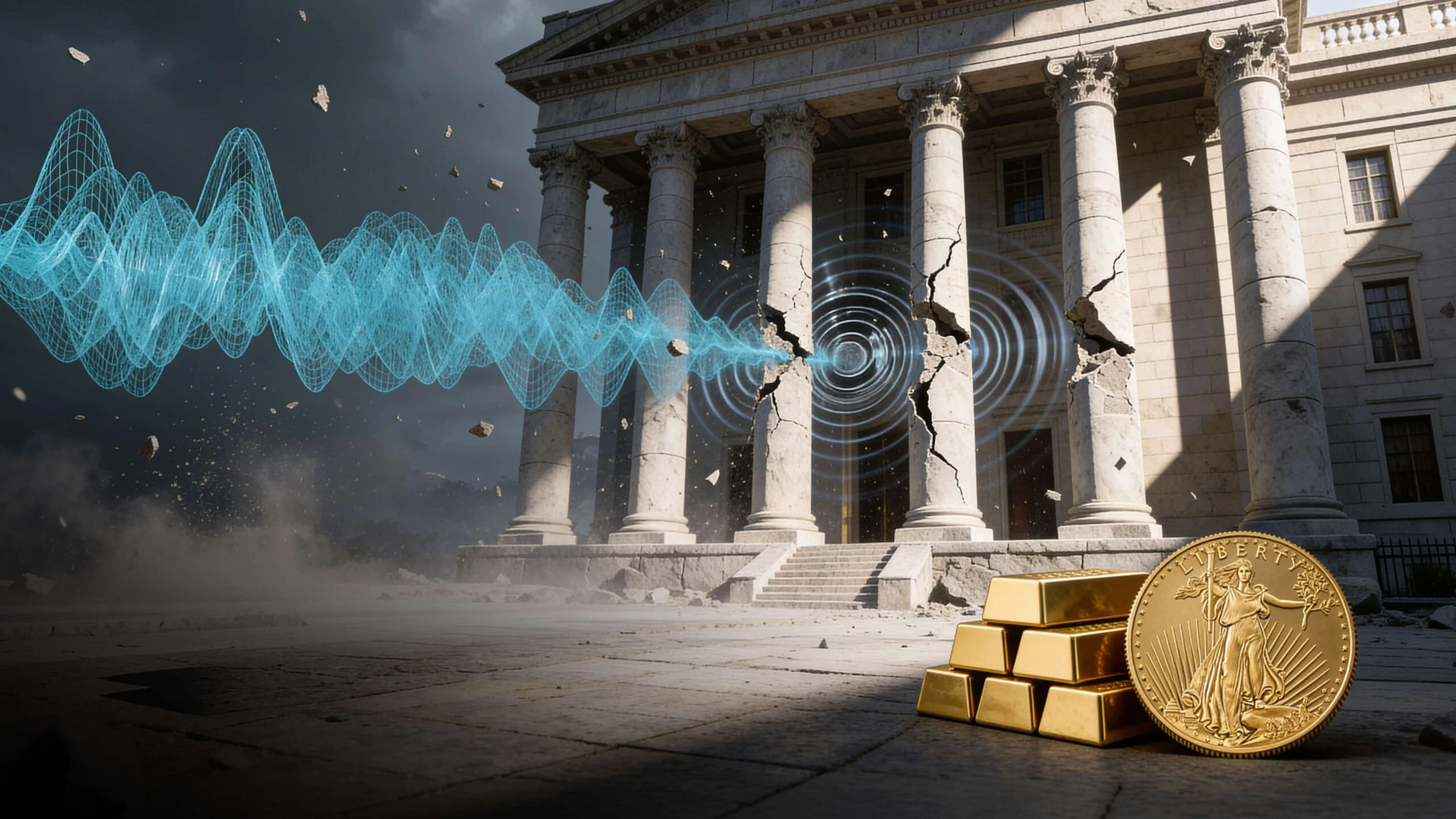
They break down how this $2 trillion sector—often referred to as “shadow banking”—has grown outside traditional regulation, shifting lending activity away from banks and into less transparent structures. The discussion explains why limited disclosure, restricted withdrawals, and rising stress among borrowers are drawing comparisons to conditions seen before the 2008 financial crisis.
Diehl and Chastain also explore how these funds operate, including the use of illiquid assets, delayed redemptions, and “payment-in-kind” structures that allow debt to grow without immediate repayment. They highlight how these dynamics can mask underlying risk, creating a false sense of stability while financial pressure builds beneath the surface.
The episode examines the broader implications for the financial system, including potential spillover into traditional banks, reduced credit availability, and the risk of forced asset sales during periods of stress. As more retail consumers gain exposure to these vehicles, the conversation raises important questions about transparency, regulation, and long-term stability.
With uncertainty building and historical patterns reemerging, the discussion reinforces why many turn to physical gold as a safe haven outside the traditional financial system. As past crises have shown, risk often becomes visible only after it has already spread—and preparation remains a key part of long-term financial security.
U.S. Money Reserve is widely known as one of the country’s largest private dealers of government-minted gold, silver, platinum, and palladium. It’s the only precious metals firm guided by two former U.S. Mint Directors, giving the company unrivaled institutional insight. Having served more than one million customers and processed over $4.4 billion in transactions, U.S. Money Reserve is widely trusted for helping Americans safeguard their financial future.
Read the full transcript
MIKE BARNES 0:10
Welcome to America’s Gold Authority Podcast. My name is Mike Barnes. People are taking their money out of private credit funds. Why is this happening? Is it a sign of things to come? Let’s talk to our experts and find out. Brad Chastain and Philip Diehl join me now. And Brad, I want to start with you. Educate us a little bit about private credit funds. I understand it’s a $2 trillion market, so tell me about them, please.
BRAD CHASTAIN 0:34
Yeah, it’s grown substantially in the last few years, even. It’s been growing since 2008. I think as we’ve talked about before, a lot of the regulations that went into place around banking and the risk that banks take following the global financial crisis pushed a lot of the traditional bank lending into the private sector, where these non-depository institutions or non-bank financial entities are taking on some of the lending that used to be done to banks. And they ultimately source funds from private investors. There’ll be pension funds and institutional investors that they then loan out to companies that are looking to borrow. And it’s not as transparent. It’s a pretty opaque market where there’s not a lot of market discovery on what the value of these loans should be. And it’s grown even more as they’ve pushed over the last few years to retail investors. As a lot of those, as a lot of institutions and pensions have been become more tapped. They need new sources of capital. And they’ve even changed some of the way that those funds work in terms of how the money is locked in and how it starts earning. So it starts earning money earlier to push it more into the retail sector. So more and more retail investors are becoming exposed to these opaque markets that are showing some signs of stress.
MIKE BARNES 2:00
Opaque isn’t always a good thing. And Philip, I want to talk to you about that. As the 35th Director of the United States Mint and President of U.S. Money Reserve, I see terms let’s say like credit crisis, things like that in articles. Does that worry you, especially going through all that you’ve seen in your past, 2008 and before?
PHILIP N. DIEHL 2:19
It does worry me. And uh and the credit crisis that uh that we’re talking about that really has sort of broken into the news in in the last several months, is one in which these uh shadow banks, what I call shadow banks, private credit banks, uh limit the ability of account holders to withdraw funds. Typically it’s the limitation is around 20 percent every quarter or so, maybe 10 percent. And that’s designed to prevent a run on the bank if there’s a sudden loss of confidence in the bank. And and this is necessary because these uh shadow banks are not protected by the federal government and uh the deposit insurance that uh the main banking system is. And the reason for that is because they are not subject to the same regulation, and that’s uh that the banks are. And that’s where uh that’s where a lot of the risk lies in the shadow banks is as Brad was talking about, uh they’re a little bit they’re they’re gray boxes or even black boxes where we’re not sure what’s going on at any given time. And when I say we, I mean the banking regulators too, Federal Reserve, and um and the quarterly reports that they’re required to provide don’t really reveal enough of us to have to us to have a lot of confidence. So what we’ve seen that has led to this talk of uh of the possibility of a shadow banking crisis is that there has been a run on a couple of these banks. And uh it’s not clear why. Some of it has to do with uh shaking confidence in the U.S. economy among uh among these investors, including institutional investors. In other cases, it’s a uh it’s a need for liquidity uh because of what’s happened elsewhere in their accounts. This is but what we’ve seen as a result of these runs is that several of the largest funds have lowered their limits, uh tightened their limits on how much can be withdrawn in any quarter. It’s gone down as low as 5 or 10 percent for some of these largest funds. Uh and that means that there are billions of dollars that are waiting to be reclaimed for the in the next quarter. And the following quarter, there’s no doubt that those funds will still be facing uh more withdrawal requests than what uh they’re prepared to release. So that’s raising a lot of questions and a lot of concerns. Blue Owl uh in particular had a big run uh in this quarter. Like I think the request amounted to around 23% of their funds. Um and um the others include BlackRock, a fund of BlackRock, and um and also um I I believe Morgan Stanley, but there are three or four others that have also drawn attention.
MIKE BARNES 5:49
It’s not exactly the Great Depression with a run-on banks, but it still has to worry a lot of consumers, a lot of people who are who have their money in these private uh credit, private credit funds. So, Brad, what do people need to do if they’re worried about things right now?
BRAD CHASTAIN 6:05
Something we talk about all the time is make sure that we’re diversified to protect against a variety of scenarios, because again, we there’s no way to really know how big the issue is. Um, the restricted outflows isn’t by itself an issue. Those are built into the funds. In fact, when people enter those funds, whether they realize it or not, they’re agreeing to those restrictions. And that’s because they invest in very illiquid assets. That if people are taking money out, because the assets that they would have to sell to give those folks their their money are very illiquid, they may not be able to get a proper price, such as if they were selling something that was liquid, like something in a uh the stock market or something like that. And so it’s those things are put in place really to protect the existing investors that are still holding onto the funds. So that that is really baked into the cake before people even enter into the agreement. It’s not just uh, hey, bad things are happening and now we’re going to restrict. There have been, to Philip’s point, tightening though. Blue Owl, their their fund is actually coming to end of life that was structured for a period of time, and they were kind of in the process of winding down the fund uh since it had um it was kind of coming to an end. And as those runs uh started, they stopped all withdrawals, in fact, but it’s so that they could continue this orderly um you know dismantling of the fund as it was coming to end of life. So the restrictions by themselves aren’t bad, but it’s why are the restrictions taking place? Um and that again, it’s a lot of opaqueness, but there are some things that we do know. We know a lot of the um the borrowers of of that money that owe the funds money have not been able to repay. They’ve been able to pay cash to repay their loans over time. And more recently, some of those funds have switched to what’s known as payment in kind, where instead of repaying their, you know, their periodic obligation that they have to repay to the fund, they’re allowing it to be repaid with its increasing debt. So the fund will add to the principal amount that the company that has borrowed the money owes. So the company’s not paying more, there’s no new money coming into the fund, but now the company owes more and the principal balance owed is is greater. And so that’s kind of leading to more of these what we call zombie companies, companies that whose revenues don’t even cover their debt service and they’re unlikely to ever repay. And then, as we’ve talked about before, what we don’t also have a lot of transparency in, but we know it’s substantial, uh, is the exposure that actual real financial institutions have to this because they’re the primary lender to these funds that then lend out in these um markets. So ultimately, if those funds go under and people are not repaying the funds, then the large banks that we know and trust that do have FDIC insurance and all of these things are still under a tremendous amount of stress. And that ripples throughout the economy because as their balance sheets become impaired, it restricts their ability to create new credit and new loans that are required to refinance existing debts out there. And as we’ve talked about so many times, one of the long-term structural positive things for gold is that the system is built on growing and increasing credit to roll over debts. And as soon as that becomes impaired, that’s where you see financial crisis that impacts markets like stocks, even when the economy is doing well. I mean, the economy can be doing well, and you still can get major corrections in stock markets as that liquidity drives up that drives stock prices. So that times sometimes throws people off that the economy and financial markets are not one in the same, and they do have different factors that impact them.
PHILIP N. DIEHL 9:54
If I can follow up on something that Brad has said here, uh I think he’s touched on a couple things that are really important for people to understand. Number one, uh these uh shadow banks uh are look like they are designed to uh to uh restrict the risk to the people who uh either run the funds or have invested in the funds. Uh and that risk they bear because they expect the returns to be higher. That’s why they’re not working through the traditional bank system. They’re working through the private banks because they expect higher returns. You know, the market is always uh pressing for higher returns. Also, what tries to happen, what people try to do is shift risk onto other people. So they take the gains and then shift the risk elsewhere. And that is actually happening here. The closer relationship that develops between the bank, the traditional banking sector and the shadow banks uh necessarily shifts risk to American taxpayers. The reason for that is that those traditional banks do have coverage from the FDIC for deposit insurance. And if they’re uh if they’re weakened and accounts fail in those banks as a result of failures in the private banking system, then we as taxpayers end up indirectly paying for uh those failures in the private banking system. And so that is a that is a growing source of shift of risk uh to others outside of those who are gaining benefits. And this is one of the crucial signs of a growing risk of a financial crisis. When we look at the history of financial crises over the last 100 years, this is one of those uh one of those symptoms that shows up in which there is increasing uh uh shift of uh there’s increasing financial system innovations, number one, and those innovations include shifting of risk outside of those who uh gain. Another thing that’s really important here to talk about is the current administration is pushing to expand the availability, the ability to to the legal ability to invest in these shadow banks uh through from uh IRAs, from uh retirement of uh devices uh and vehicles. And that is one of my real concerns is the possibility that uh your retirement uh becomes vulnerable not just through the institutions that are investing in uh uh in IRAs, but also investing in those uh products that support IRAs, but also the ability of individuals uh to invest in the private banking system. And this is another symptom you see over and over again over the last 100 years, in which uh retail investors are allowed to invest in increasingly uh risky enterprises, and it’s done because those uh enterprises, the those innovations have become vulnerable and they need additional funds to uh sustain them. And so the pressure comes to open up those investment vehicles to retail buyers who don’t really understand the risk that they’re bearing or what the dynamic is about why politicians uh or businesses uh want to allow uh those kinds of investments.
BRAD CHASTAIN 14:12
I think that’s the key to, Philip, is that they don’t understand it. So they can look at the performance of one of these vehicles and see a pretty stable track record without understanding how volatile the risk along the way has actually been because it doesn’t get recognized in the market, because it’s these the underlying investments aren’t traded in the market. They’re valued basically at whatever the fund company says they’re valued at because it’s nobody else is trading. It’s not like you know you always know what the price of Microsoft stock is or Google stock. These are not traded like that. So um even if a uh uh a borrower on a particular loan is heavily stressed and is not able to repay, even if they aren’t repaying, if they’re doing what I was talking about earlier, they’re rolling it over by adding the interest they owed back to the principal, so they owe even more. The fund books that as revenue. It looks very stable in earnings, but that risk is just building and building as the companies get more and more underwater behind the scenes. And that’s something that an investor just isn’t going to see and even recognize. They just see the stability, and these are often stole as being stable for that reason. The term we heard long ago was marked to market with the subprime not being marked down on books. These aren’t being marked to market because there is no market, these are highly illiquid assets behind the scenes.
PHILIP N. DIEHL 15:38
Yeah, there’s not there’s not a traditional market discovery mechanism, uh price discovery mechanism uh in a uh in an open market. So that’s crucial. Uh now I think it’s also important to understand what we’re talking about about these zombie banks. Sometimes it can kind of be complex, but I think a real simple uh analogy is that if you cannot pay your mortgage, but you strike an agreement with your mortgage company that all the interest that you owed on your last payment or in your next year’s payments are going to be added to the the principal of your loan. Uh, and then but and as a result, your credit rating basically remains the same because you’ve uh continued to uh meet the requirements of this new mortgage agreement, uh, then um then that’s the and there’s no disclosure of that outside to the people who are investing, say, in your mortgage in the higher uh in the higher uh loan amount, then that’s kind of what we’re talking about here. You can imagine that if you’re a homeowner and you just can’t make your payment, and so every month your monthly payment is uh going into the principal, then it becomes increasingly difficult for you to pay off that loan and meet whatever payments eventually uh come to be required.
MIKE BARNES 17:18
Brad, you used a great word earlier, understanding. And a lot of people, I’m afraid, don’t understand exactly what they’re getting into or what the limitations are. We talked about the limitations earlier, and I’m almost picturing It’s a Wonderful Life with Mr. Potter saying, I’ll give you 50 cents on the dollar for your stock. And people don’t understand that they do have limits on their redemptions that they can get here, but they want their money now. So should there be more regulations here? Should the regulations be higher and stronger like they are with banks?
BRAD CHASTAIN 17:47
Probably so as far as the transparency goes. Uh, the limit on redemptions uh in order to have these types of funds, they’re just necessary to protect the funds. If all of a sudden, to Philip’s point, if somebody starts withdrawing and a lot more start withdrawing, even if it’s just rumor and there’s nothing wrong with the underlying investments, it can really hurt existing share owners because they’re gonna have to start selling those assets at a fire sale. So when you’re dealing in that illiquid world, the limitation on redemptions is just necessary to allow for safety of the overall fund. I mean, it’s it’s just a matter of fact it is. However, when people situation changes and they suddenly need that money for some reason, uh, and they when they sign the agreement, they didn’t think they were going to need it for a period of time, then that’s where they become problematic. And these have historically gone to institutions and pensions and endowments and things like that that have a 30-year time frame. And and the way they were structured is that, you know, the first few years, that money was not even invested. It was actually, they were actually running negative cash flow for several years, so they kept kind of that cash buffer before it actually got invested. People wouldn’t see a return for a period of time, but they had that 30-year time horizon in these endowments, they’re able to manage that and understand the agreement. However, they’ve that’s called a J curve, where it’s an initial loss and then a gain, and these funds have engineered um a way to sort of abolish that and invest the money in uh immediately because retail investors don’t want several years of a loss before they realize a gain. So in order to be able to sell them, they’ve they’ve eliminated that, but they still have those limitations in place that a lot of people, even if they sign the agreement, they don’t necessarily understand it. So um that that’s where the problem becomes. But the limitations themselves on restrictions, they’re just necessary given the type of investment that it’s doing to uh that it’s using in order to really protect the overall fund.
PHILIP N. DIEHL 19:51
Uh I think it’s worth uh talking just a minute about what all this has to do with gold. And uh and there are a couple elements of this. One is because we’re seeing these signs of stress, uh, and they’re outside of this gray or black box, but there are signs of stress that are coming from inside those boxes. And because there’s $2 trillion, and $2 trillion is a lot of money, it’s it’s not a dominant uh uh amount of money in the marketplace, but but uh it’s uh enough to be worrisome to see these signs of stress. And um and because we we don’t know what’s going on inside them very well about the investments, and because we know from experience that black boxes are bad for the financial system, especially when they grow to the situation where they’re able to shift risk outside of their own investors onto somebody else. And in this case, the taxpayers. The other thing to bear in mind is that it’s not just the uh the the shadow banks themselves, it’s the implications of what happens if things go wrong with them. And not just the implications for taxpayers because of uh the shift of risk to the banking system, but also the risk to shareholders in the marketplace, asset holders who could be affected by rapid sales that are triggered by problems in the bank. Less well known than Jamie Diamond uh last fall talked about uh there being cockroaches. Some of these companies, some of these black uh box companies being cockroaches, and some of the companies that uh that they have funded are being cockroaches and are zombie companies and and are uh in danger of um of really kind of breeding in the walls. I mean there’s there’s nothing that has happened that has uh addressed those concerns that diamond brought up last fall uh and many of the pressures that were driving uh the the market toward those concerns have continued.
MIKE BARNES 22:22
Maybe I’m just too conservative, but I hear terms like cockroaches and opaque and zombies and I’m thinking I’d rather have something that is a safe haven like gold. That just worries me as someone who’s trying to figure out what to do with retirement.
BRAD CHASTAIN 22:36
Yeah and you don’t even have to have those in order to be exposed. The parallel would be the global financial crisis. You didn’t have to be invested directly in subprime mortgages to have been impacted by subprime mortgages. That was actually a smaller market than the the private equity market. And for the most part in the end, right? The government came in through their TARP program and bought a bought all of that so-called bad debt and ended up turning a profit on it because most of it ended up paying. It was only a small part that wasn’t getting paid. And then as investors shied away from them those types of investments became illiquid and the way they were tied up within the banking system it spiraled and got the credit crunch as banks stopped lending and everybody was impacted as a result of that small market, even if you didn’t have direct exposure. And so that’s kind of the parallel here you don’t have to own these. It’s just the fact that it’s there and there’s broader systemic exposure to it that ties every single one of us into the the fate of that market.
PHILIP N. DIEHL 23:47
And that’s exactly the source of my concern as you look back at 2008 the great financial crisis there were a lot of people millions of people who were affected and in some cases certainly their financial lives if not their personal lives were lives were destroyed through this process that I’ve described of people taking risk and and and pushing it off onto someone else. And that’s exactly what happened in this situation. And we had many uh executives and uh and employees of uh banks and financial institutions and credit uh credit rating agencies who made a ton of money through this process and much more than they lost as a result they many of them just came through squeaky clean through the financial crisis uh and they and many of them uh were involved in fraud or what would have been fraud if the financial industry and the ones around the housing market hadn’t written the laws themselves and the regulations through the government process. And nobody went to jail. I mean Martha Stewart went to jail okay they went after Martha Stewart and they they went after one guy I can’t remember his name from Wall Street or a low-level figure but all of these people who built this house of cards that fell but they went they were unscathed not one of them was I don’t think even one was indicted and many of these people are in the same market in the market today and making use of the same kinds or different kinds of financial innovations and obscure kind of kinds of vehicles in order to work the same wonder for themselves. And so this kind of thing makes me really nervous. This is probably one of my top two uh areas where I am most concerned because so many of the indicators that suggest a financial crisis is being set up are reflected in the shadow banking market.
MIKE BARNES 26:24
You’ve definitely both given us something to think about here as we’re getting ready for what’s to come and hopefully it’s going to have a storybook ending like It’s a wonderful life. Thank you, Brad Chastain and Philip Diehl for joining us today.
PHILIP N. DIEHL 26:36
Thank you Mike thank you Mike and the best way to make sure you do have a happy ending is to have some protection with gold.
MIKE BARNES 26:45
Fall back on that safe haven. That’s all the time we have for today’s episode on behalf of all of us here in the U.S. Money Reserve Studios thank you for tuning in. If you have any questions or you want to learn more about today’s episode you can call the number in our episode description and speak with one of our friendly account executives. They will be happy to answer any questions you may have about precious metals and the strategic role they can play in achieving a secure and comfortable financial future. I’m Mike Barnes. We will see you next time on America’s Gold Authority podcast the markets for coins are unregulated prices can rise or fall and carry some risks.

Ready to protect your savings? Get your free guide today.
Get your free guideKeep listening
Related episodes
- Episode 60Withdrawal Limit: When Banks Restrict Your Money
On this episode of America’s Gold Authority® Podcast, host Mike Barnes is joined by Philip N. Diehl, President of U.S. Money Reserve and former Director of the U.S. Mint, and Brad Chastain, U.S. Money Reserve’s Managing Director and Global Head of Research, to examine the growing concerns surrounding financial system stress and what it could mean for access to your money.
Listen now - Episode 71Shifting Sands: How AI Could Change Retirement
On this episode of America’s Gold Authority® Podcast, host Mike Barnes is joined by Philip N. Diehl, President of U.S. Money Reserve and former Director of the U.S. Mint, and Brad Chastain, U.S. Money Reserve’s Managing Director and Global Head of Research, to examine how artificial intelligence could transform the economy—and what it may mean for retirement planning.
Listen now - Episode 62Through the Inflation Storm: Gold, Energy Markets, and the Fed
On this episode of America’s Gold Authority® Podcast, host Mike Barnes is joined by Philip N. Diehl and Brad Chastain to examine rising inflation, energy market disruption, and the Federal Reserve’s next move. They explain why higher oil and food costs could keep pressure on consumers—and why gold continues to play a growing role in long-term protection.
Listen now